
 Fax: 508-651-2674









Add Disney-Style Magic to your Training
I was delighted to host Mouse-Man Consulting’s Lenn Millbower at a recent Trainers Warehouse Show & Share. With more than 40 years of experience across Disney—ride host, stage manager, lead trainer, and more—Lenn knows exactly how to make magic happen in our classrooms. He shared his top techniques for infusing emotion, energy, and engagement into training through thoughtful staging, props, music, and multisensory learning.
LENN’S LEARNER-TAINMENT APPROACH
Lenn opened by comparing the challenge of merging learning and fun to mixing broccoli and brownies—both valuable, but not always easy to combine. His Learner-tainment framework offers five practical strategies to bring fun, energy, and meaning together. Throughout the session, Lenn’s Disney stories brought each concept to life. (Watch the full recording HERE.)
The Five Strategies of Learner-tainment
• Evoke Emotion
• Layer Learning
• Present with Props & Pictures
• Stage Your Surroundings
• Mastermind the Music
EVOKE EMOTION
“Others hit intellect. We his emotion. Those who appeal to intellect only appeal to a very limited group.” ~Walt Disney
Appealing to emotion is a key Disney-style approach, one passed down from Walt Disney himself. At Disney—and in great training—emotion is the doorway to engagement. Millbower explains, telling stories is one great way to evoke emotion and often the approach most familiar to trainers. However, trainers can tap into emotions with a variety of other techniques, such as role-plays, games, or setting the stage by having participants connect with the challenge at hand.
Lenn shared the example of priming participants learning a new payroll system. He first asked participants to imagine their ideal weekend and reflect on what it might cost. By tapping into a personal, emotional need (“I want the money to enjoy my life”), he created a meaningful bridge to the learning content. This kind of emotional priming helps learners with different styles and intelligences better absorb key information.
LAYER LEARNING TO APPEAL TO MULTIPLE INTELLIGENCES
Disney’s training intentionally engages a range of learning preferences. Lenn outlined several examples:
-
Visual/spatial learners: maps and visual layouts
-
Kinesthetic learners: discovery tours that let learners experience concepts firsthand
-
Naturalistic thinkers: examples tied to landscaping, recycling, and environmental impact
-
Logical/mathematical learners: data, facts, and structured reasoning
While modern brain science shows we use multiple “intelligences,” the takeaway is simple: the more senses and modalities we engage, the stickier the learning becomes.
 PRESENT WITH PICTURES & PROPS
Consider your Colors
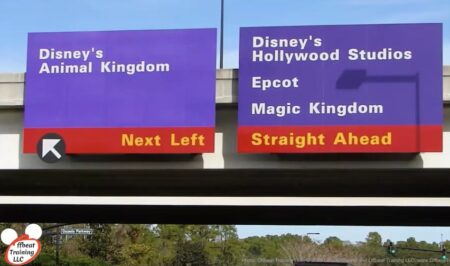
Disney Imagineers understand that color shapes emotion. As Imagineer John Hench noted, “Color is the language to which people respond consciously and subconsciously.” Lenn encouraged trainers to take a similar approach—use:
-
Blue for calm or neutral backgrounds
-
Yellow for essential information
-
Red for warnings or urgent points
 Plan your Props
Props are powerful. They grab attention, create metaphors, energize learners, and make ideas tangible. Lenn shared examples from his Disney days—using a Koosh ball to model electrical current, or a globe to help custodial staff introduce themselves. Trainers can also borrow from improv by asking participants to link a random object to a learning concept, sparking creativity and deeper processing.
Many trainers also shared that Dry-erase Answer Boards have been favorite props in their training rooms.
STAGE YOUR SURROUNDINGS
The folks at Disney consider every touchpoint with their guests. Disney employees are crystal clear about what belongs “on stage” and “backstage.” Trainers benefit from the same awareness. Every element of the environment—what learners see, hear, smell, touch, or navigate—affects their experience.
Consider:
- Room setup and traffic flow
- Lighting and temperature
- Background visuals
- Fidget toys or table materials
- Your own tone, presence, and energy
In essence, trainers are not just facilitators—they’re hosts. Thoughtful staging signals care, competence, and psychological safety.
MIX IN MUSIC
Music is one of Disney’s most strategic tools for shaping emotional experience. It’s another way that Disney carefully engineers guest experiences. Every attraction and area of the park features its own specially selected music, setting the desired mood. Music can play a similar role in training:
-
Use major key music (happy, optimistic tunes) to set a welcoming or energizing tone during arrivals and breaks.
-
Use minor key music (sad, calm, thoughtful selections) for reflective activities or quiet thinking.
-
Reserve lyric-heavy songs for interludes when learners are not focused on content.
-
Choose instrumental pieces during work sessions or discussions.
-
Match themes or lyrics to your audience for added humor or connection. (I.E. “I got you (I feel Good) for a group of doctors or clinicians).
-
Energize game show experiences with lively musical interludes, like those built into Gameshow Pro.
Music works best when it enhances the environment without distracting from it.
CREATE YOUR OWN DISNEY-STYLE MAGIC
Lenn’s message is clear: you don’t need a theme park, a cast of characters, or a multimillion-dollar budget to create memorable learning experiences. By evoking emotion, layering learning, staging your space with intention, and weaving in props, visuals, and music, any trainer can spark a sense of wonder and engagement. The real magic happens when learners feel seen, energized, and connected to the material—and that’s something every facilitator can cultivate. With a little creativity and a touch of “Learner-tainment,” we can transform ordinary sessions into extraordinary moments of discovery.
MORE RESOURCES



PRODUCTS YOU’LL LOVE!

Easily "gamify" learning events